

Hypnotherapy and NLP
 Inner work promotes change.
I love doing inner work with clients. This process involves having the client close their eyes and focus on their breath to quiet the mind, cut down on external stimulation, and thus be more able to notice what is happening inside with their thoughts, feelings, and body sensations.
This is a rich information place for deep introspection and change work.
Hypnotherapy and NLP (Neuro-Linguistic Programming) represent two modalities that work well with this type of Inner Work. Both modalities can produce rapid change and powerful results.
There’s an overlap between these two modalities because NLP partly originated from the study of a few master therapists, including the hypnotherapist Milton Erickson, MD, a psychiatrist and psychologist, widely regarded as the father of modern clinical hypnotherapy.
The hypnotic state is a deep state of relaxation.
Going to that relaxed place is called a trance, and it offers an excellent opportunity to deal with both the conscious and unconscious mind.
People naturally enter trance-like states during activities involving focused attention and altered states of consciousness, such as daydreaming, falling asleep or waking up, reading, watching movies, meditation, yoga, or even prolonged driving.
Hypnotherapy is beneficial in dealing with challenges like weight control, quitting smoking, anxiety, being more confident, and overcoming phobias.
Hypnotherapy is also suitable for fast, efficient, and painless behavioral change.
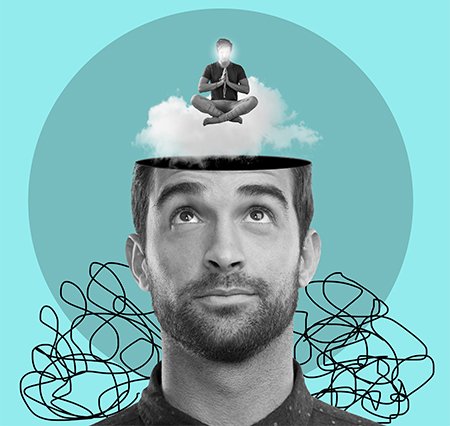 NLP connects the inside with the outside.
It is a psychological approach that studies how language influences thought and behavior to understand how individuals can change their thoughts and actions to achieve desired outcomes.
It explores the connection between our neurological processes (“neuro”), language (“linguistic”), and behavioral patterns (“programming”).
NLP aims to help individuals understand and potentially modify these patterns to improve communication, overcome limiting beliefs, and achieve personal and professional goals.
This type of therapy can help individuals address anxiety, phobias, depression, and other mental health challenges by assisting them to reframe negative thought patterns and develop more positive coping mechanisms.
We have all been programmed since childhood.
Working with our programming is a big part of both Hypnotherapy and NLP. Most of it is unconscious and affects how we see ourselves and the world.
Early childhood experiences profoundly affect lifetime outcomes for all of us. These experiences become embedded in the brain and change its architecture. This programming drives us until we become aware of what it is and how it affects us, and decide if there is something we want to change in this programming.
In NLP and Hypnotherapy, we want to understand how current programming works so that people can choose to create more beneficial programming.
 Programming can be negative or positive.
For example, negative programming might involve a situation where a child has a learning disability and, due to his lack of success in school, he interprets that he is ‘stupid,’ even though he might be brilliant. That’s a form of programming.
In another example, a parent may feel strongly that a particular child should be a doctor, a lawyer, or an athlete to honor the family tradition or to gratify the parent. That is programming that can be very harmful if it is not in alignment with who the child is and if it is not recognized as programming but instead seen as fate.
An example of positive programming is when a child is adored and given messages that s/he can learn from their mistakes and can solve whatever problems arise.
That experience of having such a champion would be part of good programming! Most of us have elements of healthy and unhealthy programming. In NLP therapy, we do our best to be aware of what programming affects a person and become conscious of using that program or changing it in ways that benefit that person the most.
“Every child deserves a champion: an adult who will never give up on them,
who understands the power of connection and insists they become the best they can possibly be.”
– Rita Pierson
Experience changes through introspection.
I invite you to be that champion for yourself in the places where you needed a champion and didn’t have one.
Call (207) 439-6600 for an appointment, and let’s begin exploring your programming and deciding how you want to change it to give you more satisfaction and Inner Peace.
Begin now to shed the pain and move toward more Inner Peace.